
Understanding Psychometric Measurement
Constructs, Variables, Scores and Measurement Error
Abstract
Psychological research frequently involves constructs that cannot be observed directly. Intelligence, depression, anxiety, resilience, self-efficacy, psychological wellbeing, motivation, personality, social support and many other concepts are latent attributes inferred from observable responses or performances. Psychometric measurement provides the theoretical and statistical framework through which such constructs are operationalised, measured, evaluated and interpreted. Measurement, however, is not simply the assignment of numerical values to questionnaire responses. It involves a chain of theoretical and empirical decisions connecting a construct definition to observable indicators, scores, interpretations and intended uses. This Research Note examines the foundations of psychometric measurement by distinguishing constructs, variables, indicators, items, scores and measurement error. It explains the distinction between observed and latent variables, formative and reflective measurement perspectives, and the relationship between measurement models and substantive theory. Particular attention is given to the principle that a test score is not inherently valid or invalid: validity concerns the strength of evidence supporting interpretations and uses of scores for specified purposes and populations. The Note also introduces measurement error as a fundamental feature of psychological measurement, explains why reliability and validity must be evaluated as components of a broader measurement argument, and presents a practical twelve step workflow that researchers can follow, including how these concepts can be operationalised within PsychtrixWeb. Keywords: psychometrics, psychological measurement, latent variables, observed variables, constructs, measurement error, test scores, validity, reliability, PsychtrixWeb
PSYCHTRIXWEB RESEARCH NOTE 001
1. Introduction
Psychological science depends heavily on measurement. Researchers routinely ask whether depression predicts academic performance, whether resilience protects against psychological distress, whether organisational justice influences employee wellbeing, or whether an intervention improves self-efficacy. Yet many of the variables in such studies cannot be directly observed in the way that height, weight or temperature can be observed.
This creates a fundamental methodological problem.
A researcher may wish to measure resilience, but resilience is not directly visible. The researcher therefore develops or selects observable indicators that are theoretically related to resilience. Participants respond to items, perform tasks, or provide ratings. Those observations are then transformed into scores, and the resulting scores are interpreted as evidence about the underlying construct.
Psychometrics provides the scientific framework for evaluating whether this chain of reasoning is defensible.
The Standards for Educational and Psychological Testing state that psychological and educational measurement must be considered in relation to the interpretation and use of test scores, including issues of validity, reliability, fairness and appropriate use (American Educational Research Association [AERA], American Psychological Association [APA], and National Council on Measurement in Education [NCME], 2014). The Standards remain the central professional reference for psychological and educational testing in the United States and are widely cited internationally.
Consequently, psychometric analysis should not begin with the question:
“Which statistical test should I run?”
It should begin with:
“What construct am I trying to measure, what evidence represents that construct, and what interpretation do I intend to make from the resulting scores?”
Table 1 previews the terminology developed across this Note, which is used consistently in the sections that follow.
Term | Definition (brief) |
|---|---|
Construct | A theoretically defined attribute that cannot be observed directly. |
Variable | A representation of a construct that can take different values across observations. |
Indicator | An observable manifestation used as evidence of the construct. |
Item | A specific measurement prompt presented to a respondent. |
Score | A numerical summary derived from one or more observations. |
Measurement error | The component of an observed score not attributable to the true score. |
Table 1. Core terminology used throughout this Research Note.
2. What Is a Psychological Construct?
A construct is a theoretically defined attribute that is not directly observable but is inferred from observable manifestations. Examples include intelligence, anxiety, depression, self-esteem, resilience, psychological wellbeing, motivation, empathy, organisational commitment, academic self-efficacy and social support.
A construct is therefore more than a questionnaire variable.
For example, “academic resilience” is a theoretical construct. An item such as:
“I continue working toward my academic goals even when I encounter serious setbacks.”
is an observable indicator intended to provide evidence about that construct.
The distinction matters because researchers sometimes treat an operational definition as though it were the construct itself. A questionnaire does not create the construct; rather, it provides an operational representation of a theoretically defined construct.
DeVellis and Thorpe (2021) emphasise the importance of carefully distinguishing conceptual measurement decisions from the later statistical evaluation of scales. Scale development therefore begins with conceptualisation rather than statistical analysis. Borsboom, Mellenbergh and van Heerden (2004) make a related point from a philosophical standpoint, arguing that a test is valid for measuring an attribute only if variation in that attribute causes variation in the test scores, which places the construct, and not merely the score, at the centre of measurement theory.
3. Constructs, Variables, Indicators, Items and Scores
These terms are related but should not be used interchangeably.
3.1 Construct
The theoretical attribute of interest. Example: psychological resilience.
3.2 Variable
A representation of a construct that can take different values across observations. Example: resilience score.
3.3 Indicator
An observable manifestation used to represent the construct. Example: persistence after adversity.
3.4 Item
A specific measurement prompt presented to a respondent. Example:
“I recover quickly after experiencing difficulties.”
3.5 Score
A numerical representation derived from one or more observations, expressed as:
X = Σ (i = 1 to k) Xi
where X is the observed total score, Xi is the response to item i, and k is the number of items. The score is therefore an observed representation, not the construct itself.
This distinction becomes critical when researchers interpret statistical results. A significant relationship between two questionnaire scores does not automatically establish a relationship between the underlying psychological constructs.
4. Latent and Observed Variables
Psychometric theory frequently distinguishes between observed variables and latent variables.
An observed variable is directly represented in the dataset. Examples include item responses, total scores, age, income and examination scores.
A latent variable is an unobserved theoretical construct inferred from observed indicators. In a simple reflective measurement model:
Xi = λi η + εi
where Xi is the observed indicator, η (eta) is the latent construct, λi (lambda) is the factor loading, and εi (epsilon) is the measurement error associated with that indicator.
This model expresses an important psychometric idea: observed responses contain both construct related information and error. In confirmatory factor analysis, for example, multiple observed items can be used to estimate an underlying latent factor. McDonald (1999) provides a comprehensive treatment of the statistical machinery that links observed indicators to latent variables under both classical and modern test theory.
Feature | Observed variable | Latent variable |
|---|---|---|
Directly measured | Yes | No, inferred from indicators |
Example | Item response, age, total score | Resilience, anxiety, intelligence |
Contains error | Yes, mixed with true score | Represented separately in the model |
Typical analysis | Descriptive statistics, correlation | Factor analysis, structural equation modelling, item response theory |
Table 2. Contrasting observed and latent variables.
5. Reflective and Formative Measurement
Researchers should also distinguish between reflective and formative measurement.
5.1 Reflective measurement
The latent construct is conceptualised as causing or explaining variation in its indicators. For example, depression is conceptualised as giving rise to sadness, loss of interest, fatigue and sleep disturbance. The indicators are manifestations of the underlying construct.
5.2 Formative measurement
The indicators are conceptualised as contributing to the composite construct. For example, socioeconomic status might be operationalised using household income, education, occupation, housing conditions and material assets. These indicators need not be interchangeable manifestations of a single latent psychological state.
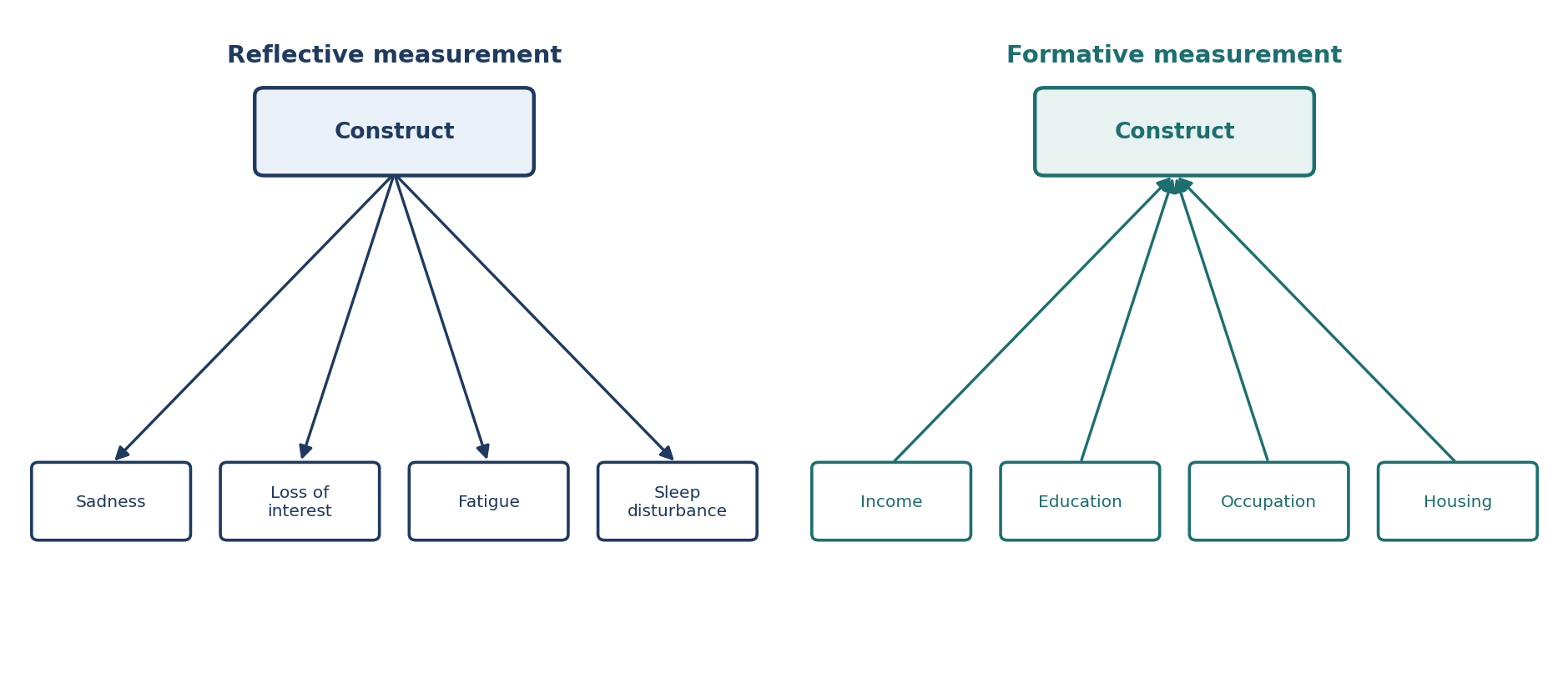
Figure 1. Reflective measurement (construct causes indicators) contrasted with formative measurement (indicators form the composite construct).
The distinction has consequences for model specification, item development, validity evaluation and statistical analysis. Researchers should therefore avoid automatically treating every questionnaire as a reflective latent variable model.
6. Measurement as an Inference Process
One of the most important principles in modern psychometrics is that measurement involves inference. A researcher does not directly observe “self-esteem”. Instead, the researcher moves through a chain of stages, illustrated in Figure 2.
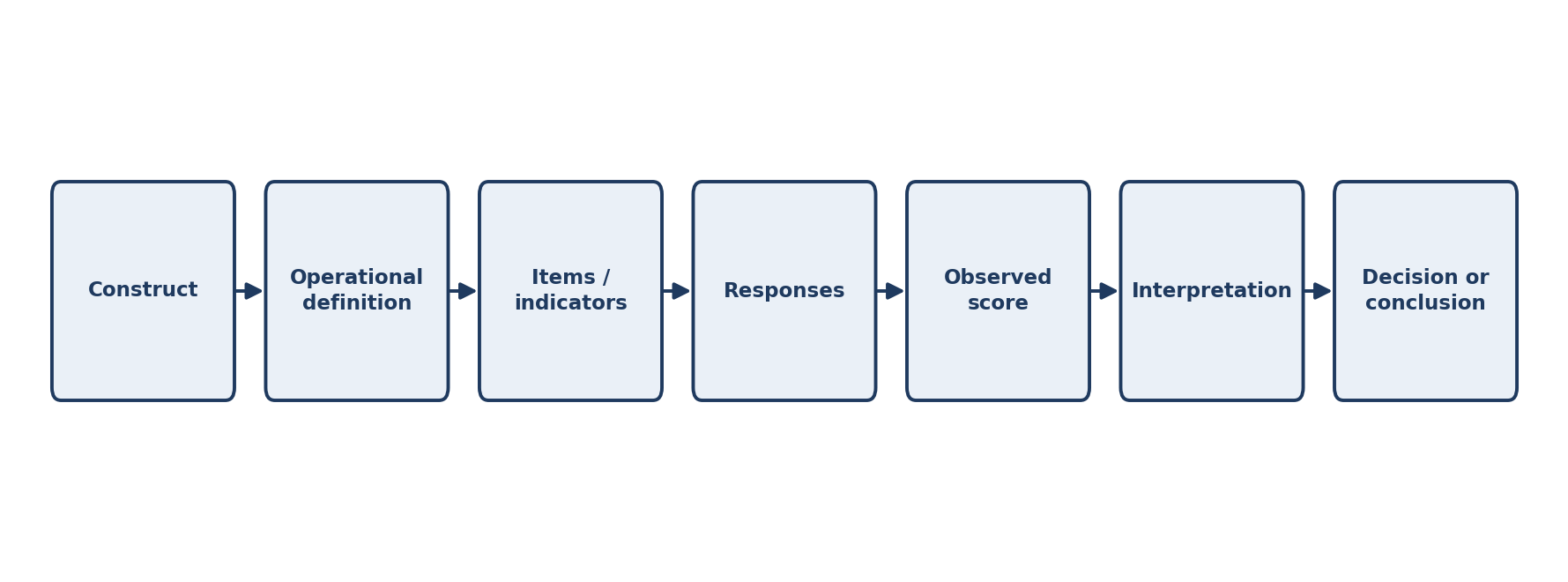
Figure 2. The chain of inference from construct to decision or conclusion.
Each transition in this chain introduces assumptions. For example, if a researcher obtains a high resilience score, the conclusion may be stated as:
“The participant has high resilience.”
However, a psychometric perspective requires a more cautious formulation:
“The participant's observed score provides evidence supporting an interpretation of relatively high resilience under the conditions in which the instrument was developed and validated.”
This distinction is consistent with the modern conception of validity. Messick (1995) argued that validity concerns the scientific evaluation of the inferences and interpretations made from assessment performances, rather than being a simple property attached permanently to a test.
7. Measurement Error
No psychological measurement is perfectly precise. Observed scores can be conceptualised under classical test theory as shown in Figure 3.
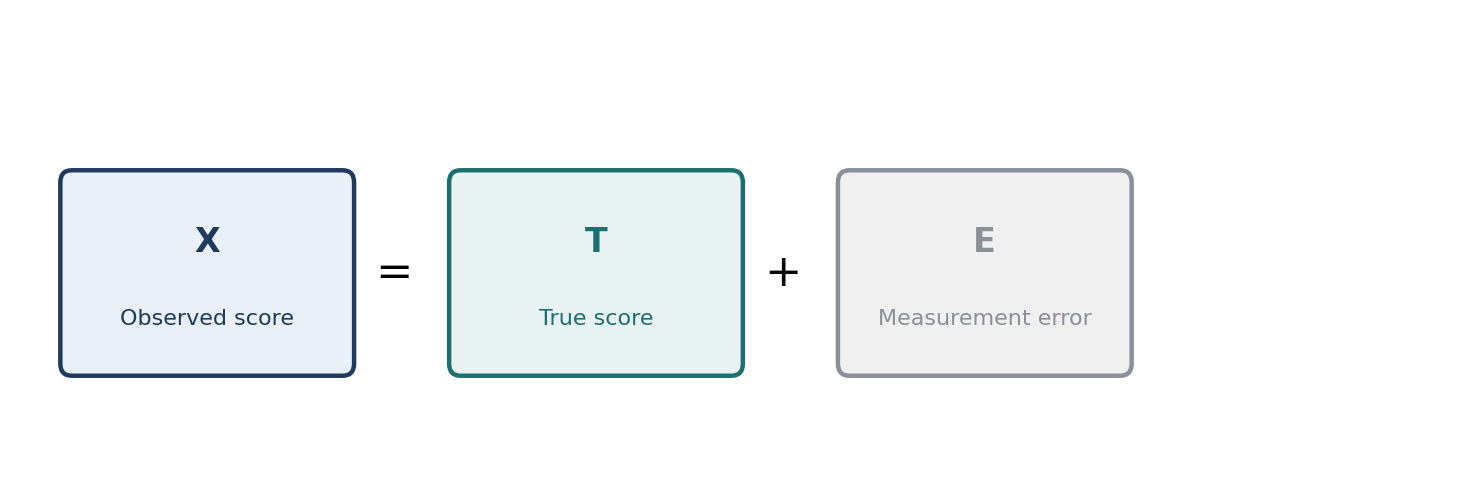
Figure 3. The classical test theory decomposition of an observed score.
The “true score” in classical test theory should not be interpreted as an absolutely knowable psychological essence. It represents the theoretical expected score under repeated measurement conditions defined by the model (Nunnally and Bernstein, 1994).
Measurement error can arise from many sources, summarised in Table 3.
Source of error | Illustrative example |
|---|---|
Ambiguous items | A double barrelled question that could be answered in two different ways. |
Respondent misunderstanding | A translated item that loses its intended meaning. |
Temporary emotional states | A respondent who completes the scale shortly after a stressful event. |
Fatigue | A long survey administered without breaks. |
Environmental conditions | Noisy or distracting testing venues. |
Administration differences | Inconsistent instructions given by different research assistants. |
Scoring errors | Manual transcription mistakes when entering paper responses. |
Inadequate sampling of the construct | Too few items to cover the full conceptual domain. |
Instrument instability | Items that respondents interpret differently on separate occasions. |
Rater differences | Two observers scoring the same behaviour inconsistently. |
Table 3. Illustrative sources of measurement error in psychological assessment.
The existence of measurement error explains why reliability is a central concern in psychometrics. However, reliability and validity should not be conflated. A measurement can be highly consistent while consistently representing the wrong construct.
8. Reliability and Validity Are Different Questions
Consider a hypothetical scale that produces almost identical scores whenever it is administered. It may therefore demonstrate excellent consistency.
Suppose, however, that the scale intended to measure anxiety actually measures general emotional distress without adequately representing anxiety specific symptoms. The instrument could be highly reliable but have inadequate validity for the intended interpretation.
This is why reliability is necessary but insufficient for valid interpretation, as summarised in Table 4.
Question asked | Reliability | Validity |
|---|---|---|
Core question | Are the scores consistent? | Do the scores support the intended interpretation? |
Focus | Precision, stability, internal consistency | Meaning, inference, appropriateness of use |
Can be high while the other is low | Yes, a consistent instrument can measure the wrong construct | Yes, a construct relevant score can still be imprecise |
Classic reference | Cronbach and Meehl (1955); Nunnally and Bernstein (1994) | Messick (1995); Borsboom, Mellenbergh and van Heerden (2004) |
Table 4. Reliability and validity address different, complementary questions.
The AERA, APA and NCME Standards (2014) treat validity and reliability as central components of responsible test development and use. This principle is examined in greater depth in PsychtrixWeb Research Note 002, which focuses specifically on reliability.
9. The Role of Theory in Psychometric Measurement
Psychometric analysis should not be separated from substantive theory. Suppose a researcher proposes that social support reduces psychological distress through improved coping. The researcher therefore needs to define:
- what constitutes social support;
- what constitutes coping;
- what constitutes psychological distress;
- how each construct will be operationalised;
- why the selected indicators represent those constructs;
- what relationships should theoretically exist among them.
Statistical modelling cannot compensate for an incoherent construct definition. A technically sophisticated confirmatory factor model cannot rescue a poorly conceptualised construct, and excellent reliability coefficients cannot establish that an instrument measures the intended theoretical attribute.
The strongest psychometric work therefore integrates theory, measurement design, empirical evidence, statistical modelling and interpretation.
10. A Practical Psychometric Workflow
A defensible measurement study can be organised into the twelve step sequence summarised in Table 5.
Step | Task | Description |
|---|---|---|
1 | Define the construct | Specify precisely what is being measured. |
2 | Establish the construct domain | Identify the major dimensions or facets. |
3 | Generate indicators | Develop items or identify existing indicators representing the construct. |
4 | Evaluate content | Use theoretical review and expert judgement to assess relevance, comprehensiveness and comprehensibility. |
5 | Pilot the instrument | Administer the preliminary instrument to an appropriate sample. |
6 | Conduct item analysis | Examine distributions, missing responses, item total relationships, response patterns, and floor or ceiling effects. |
7 | Evaluate internal structure | Consider exploratory factor analysis, confirmatory factor analysis, bifactor modelling or item response theory. |
8 | Evaluate reliability | Consider internal consistency, test retest reliability, inter rater reliability and measurement error. |
9 | Evaluate validity evidence | Consider content, internal structure, relations with other variables, response processes and consequences of use. |
10 | Evaluate fairness and comparability | Examine measurement invariance, differential item functioning, subgroup performance and cultural adaptation. |
11 | Establish scoring and interpretation | Define how scores will be calculated and interpreted. |
12 | Document limitations | Clearly identify limitations in the available evidence. |
Table 5. A twelve step workflow for defensible psychometric measurement.
11. Applying the Workflow in PsychtrixWeb
PsychtrixWeb can be positioned as an integrated environment for moving from raw questionnaire data toward a structured psychometric evaluation. A researcher might begin with a dataset containing the elements summarised in Table 6.
Data category | Typical contents |
|---|---|
Demographic variables | Age, sex or gender, education, location, occupation |
Scale items | Item 1 through Item 20 (or as many items as the instrument contains) |
Subconstructs | Dimension A, Dimension B, Dimension C |
Table 6. Typical dataset structure supporting a PsychtrixWeb analysis.
The analysis can then proceed through the following sequence:
Data screening → item analysis → reliability → EFA/CFA → validity → measurement invariance → DIF → advanced modelling
This is particularly useful when a questionnaire contains several theoretically distinct subconstructs rather than being treated as one undifferentiated scale. PsychtrixWeb should therefore encourage researchers to define the measurement structure before interpreting aggregate scores.
12. Common Conceptual Errors
Table 7 summarises recurring conceptual errors observed in applied psychometric practice.
Error | Description |
|---|---|
Treating an item as the construct | One item cannot automatically represent the full conceptual domain of a complex construct. |
Treating a score as the construct itself | A score is an operational representation that requires interpretation. |
Assuming alpha proves validity | Internal consistency does not establish construct validity. |
Assuming statistical significance proves measurement quality | A statistically significant factor loading or correlation does not automatically demonstrate that an instrument is substantively adequate. |
Ignoring population | Evidence obtained from one population may not automatically generalise to another. |
Ignoring cultural context | An instrument developed in one linguistic or cultural environment may require additional evidence before use elsewhere. |
Treating validity as a permanent property | Validity concerns interpretations and uses of scores, not a permanent certificate attached to an instrument. |
Table 7. Seven recurring conceptual errors in psychometric practice.
13. Implications for Researchers
Researchers should approach psychometric measurement as a cumulative evidence building process. The central question is not:
“Does my questionnaire have good statistics?”
It is:
“Do the available theoretical and empirical evidence support the interpretation and use I intend to make from these scores?”
This shift changes the entire research process. It influences item construction, sampling, factor analysis, reliability estimation, validity evaluation, cross cultural adaptation, subgroup analysis, reporting and interpretation. It also reduces a common problem in applied research: selecting statistical procedures first and constructing the measurement argument afterward.
14. Conclusion
Psychometric measurement is fundamentally an exercise in disciplined inference. Researchers begin with theoretical constructs that cannot usually be observed directly. They operationalise those constructs through indicators, collect responses, derive scores, and then make interpretations. Every stage requires evidence and assumptions.
A high quality measurement process therefore integrates conceptual clarity, appropriate operationalisation, reliability evidence, validity evidence, structural analysis, and attention to the population and intended use of scores. The practical consequence is straightforward:
Do not begin psychometric analysis with a statistic. Begin with a construct and an interpretation.
Once the construct, measurement model, population and intended use are clear, statistical procedures become tools for evaluating the resulting measurement argument rather than substitutes for it. The next stage is to examine one of the most frequently reported psychometric properties: reliability, addressed in PsychtrixWeb Research Note 002.
Recommended Citation
Oladunmoye, E. O. (2026). Understanding psychometric measurement: Constructs, variables, scores and measurement error (PsychtrixWeb Research Note No. 001). Psychtrix Initiative Limited.
References
- American Educational Research Association, American Psychological Association, and National Council on Measurement in Education. (2014). Standards for educational and psychological testing. American Educational Research Association.
- Borsboom, D., Mellenbergh, G. J., and van Heerden, J. (2004). The concept of validity. Psychological Review, 111(4), 1061 to 1071. https://doi.org/10.1037/0033-295X.111.4.1061
- Cronbach, L. J., and Meehl, P. E. (1955). Construct validity in psychological tests. Psychological Bulletin, 52(4), 281 to 302. https://doi.org/10.1037/h0040957
- DeVellis, R. F., and Thorpe, C. T. (2021). Scale development: Theory and applications (5th ed.). SAGE Publications.
- Embretson, S. E., and Reise, S. P. (2000). Item response theory for psychologists. Lawrence Erlbaum Associates.
- McDonald, R. P. (1999). Test theory: A unified treatment. Lawrence Erlbaum Associates.
- Messick, S. (1995). Validity of psychological assessment: Validation of inferences from persons' responses and performances as scientific inquiry into score meaning. American Psychologist, 50(9), 741 to 749. https://doi.org/10.1037/0003-066X.50.9.741
- Nunnally, J. C., and Bernstein, I. H. (1994). Psychometric theory (3rd ed.). McGraw-Hill.
Suggested citation
PhD, E. O. O. (2026). Understanding Psychometric Measurement. PsychtrixWeb Research Note, 003. Psychtrix Initiative Limited. https://doi.org/10.5281/zenodo.22653162Discuss this Research Note
Scholarly comments are welcome from anyone — no account required. Contributions are moderated before they appear.
No comments yet. Start the scholarly discussion below.